

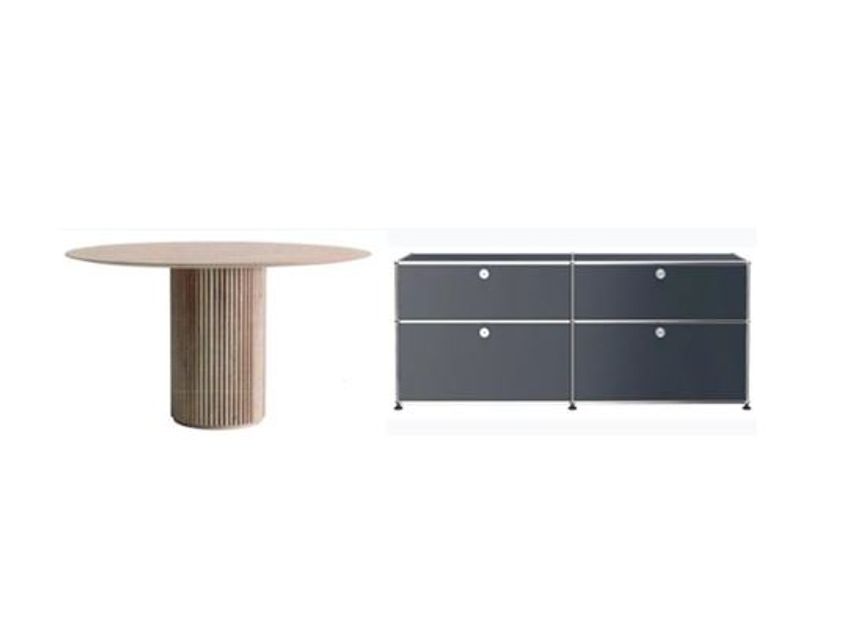

Finally, the CJEU published its long-awaited judgment in the joint cases MIO & Konektra. A utilitarian object is protected by copyright if it expresses free and creative choices and reflects the author’s personality.
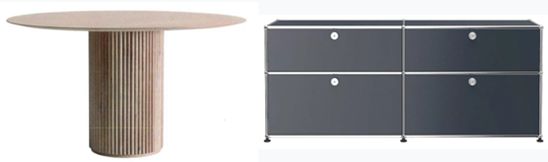
These cases concerned the Asplund table and the USM modular cabinet. The CJEU acknowledges that choices made to create such an object are often driven by technical and functional considerations. The rights holder must explain precisely why these are creative choices. A purely functional choice is not creative. Even a non-functional choice can be banal (ordinary) and therefore not creative.
Important: individually commonplace elements can still be creative in combination. Whether the author consciously set out to create a work is not decisive. Nor does it matter whether the object is exhibited in a museum or whether it is artistic.
The infringement test has also changed. The standard is no longer a matching overall impression, but rather the recognizable reproduction of creative elements that meet the threshold for a “work.” It remains to be seen exactly when such an adoption is recognizable.
I have the impression that several courts in the Netherlands already apply stricter standards in cases involving copyright on utilitarian objects. For example, the Court of Appeal in The Hague recently rejected copyright on the Secrid cardholder:
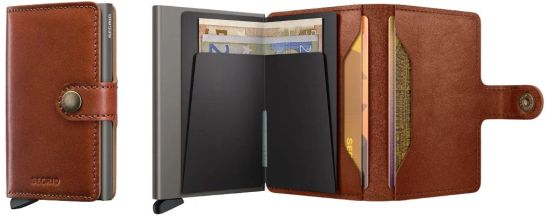
Even if the cardholder reflects free choices, the Court of Appeal holds that these are not choices that reflect the author’s personality. The chosen elements and their combinations were already present in the prior art, or are obvious choices for a designer (for example, the choice of visible stitching or a snap-button closure). According to the Court of Appeal, no explanation was given as to why the choices would be creative.
This ruling underscores the importance of registering an EU design in good time – before or shortly after market introduction. After all, the requirement of creativity does not apply in such cases. I believe we will see more design right proceedings in a few years. Fortunately for Secrid, it had arranged design registrations for a number of variants back in 2010.
Design protection is a job for specialists. Want to know more?
/Passle/64ee09bf0948529fbac8c1a7/MediaLibrary/Images/2026-10-08-13-16-13-840-6ac7979dcd43704a2ddfc05c.jpg)
/Passle/64ee09bf0948529fbac8c1a7/MediaLibrary/Images/2026-10-08-13-12-36-137-6ac796c47241551f573f565e.PNG)
/Passle/64ee09bf0948529fbac8c1a7/MediaLibrary/Images/2026-10-08-13-04-52-099-6ac794f47241551f573f4e9d.jpg)