

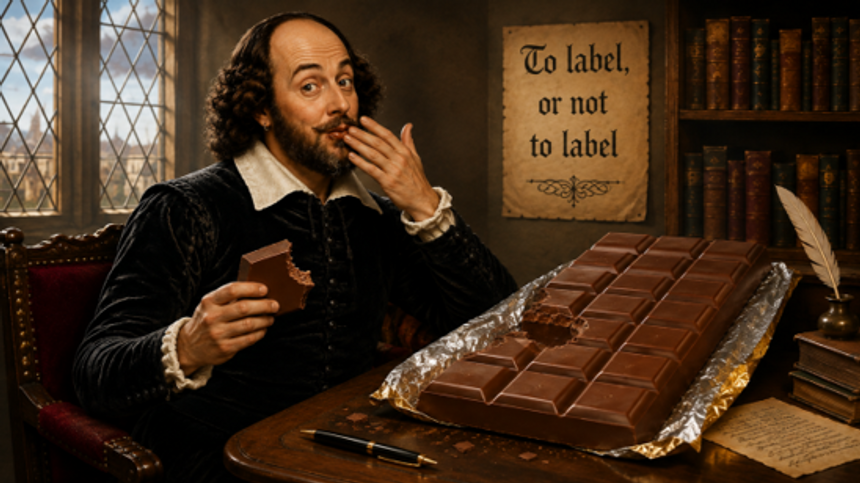

Since 2 August 2026, deployers of AI systems that generate deepfakes have been required to disclose that the content has been artificially generated or manipulated. In other words, they must label deepfakes. The AI Act officially defines a deepfake as “AI-generated or manipulated image, audio or video content that resembles existing persons, objects, places, entities or events and would falsely appear to a person to be authentic or truthful.”
But how does this deepfake labeling requirement apply in the context of advertising? There is quite a bit of confusion about this in the advertising industry. When is labeling required, and when isn't it? Advertisers and advertising agencies have their hands full trying to figure it out, and I get plenty of questions on the subject. So here are a few examples drawn from my legal practice that will hopefully help clarify things.
Q: We use an AI-generated voice for our voice-overs and radio commercials. The voice doesn't resemble that of any real person, such as a celebrity. It's an entirely fictional voice. Surely that means it isn't a deepfake that we need to label?
A: Actually, it is. For content to qualify as a deepfake, it doesn't have to resemble a specific real person or their voice. It's enough that the voice could plausibly exist in real life. The decisive question is whether someone exposed to the ad would falsely perceive the voice as authentic. In this context, authenticity also refers to how the content was created. If someone believes they're hearing a real person speak when, in fact, the voice is AI-generated, the content qualifies as a deepfake—and must therefore be labeled.
Q: We've used an AI-generated prairie landscape as the background for a print ad promoting our new SUV. The landscape doesn't actually exist, but it could plausibly exist. Is this a deepfake that we need to label?
A: Most likely not. According to the European Commission's Guidelines, audiences generally don't expect this kind of advertising background to be authentic or truthful. Provided the SUV is actually capable of being driven in the type of landscape depicted, the ad doesn't mislead consumers about the vehicle's characteristics or capabilities. In that case, you're in the clear: no deepfake label is required.
Q: We've used AI to create an image of our new chocolate bar. The bar is shown lying on a table next to a pen, making it look considerably larger than it really is. Is this a deepfake that we need to label?
A: Yes. The image could mislead consumers about the product's characteristics because the chocolate bar appears larger than it actually is. The image therefore qualifies as a deepfake and must be labeled. But here's the catch: labeling the deepfake isn't enough. A deepfake label doesn't eliminate the misleading impression about the size of the chocolate bar. You'll also need to clearly disclose in the ad that the bar is depicted as larger than its actual size. Frankly, it would probably be easier just to use an accurate image in the first place.
/Passle/64ee09bf0948529fbac8c1a7/MediaLibrary/Images/2026-10-12-08-42-58-727-6acc9d92aa3471c62a6f8408.png)
/Passle/64ee09bf0948529fbac8c1a7/MediaLibrary/Images/2026-10-12-08-15-43-191-6acc972faa3471c62a6f7188.jpg)
/Passle/64ee09bf0948529fbac8c1a7/MediaLibrary/Images/2026-10-08-13-24-22-294-6ac79986085dda6c71c4b4bb.jpg)